

Tarpaulin / Waterproof Canvas Tarps Making Machine
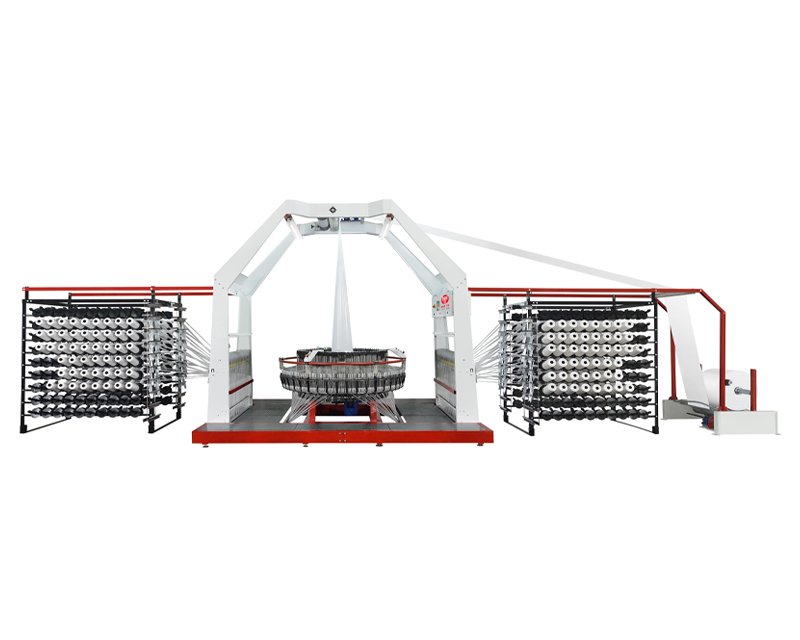
HDPE woven tarpaulins (commonly known as poly tarps or waterproof canvas) are heavy-duty, weather-resistant covers used in construction, agriculture, transportation, and industrial applications. Manufactured from high-density polyethylene (HDPE) flat yarn, on the circular loom weave into tubular woven fabric and in-line center unfold by heat slitting unit or ultrasonic slitting system into open flat woven fabric, then outside-laminated with PE melt and processing with hot air welding machine into large-format sheets and through the converting process to be final products - Tarpaulin; tarpaulins provide durable UV resistance, waterproofing, and tear strength for demanding outdoor environments.
At Hao Yu Precision Machinery Industry Co., Ltd., we have supplied complete tarpaulin manufacturing lines since 1980. Our turnkey solutions cover every stage — from flat yarn extrusion through circular loom weaving, outside lamination, rewinding, hot air welding, and eyeletting — delivering high-output lines with consistent lamination quality, precise sheet dimensions, and reliable seam strength for tarpaulin producers worldwide.
-
01

Mixer Machine

-
02
-
03
-
04
-
05
Rewinding
-
06
Hot Air Welding
-
07
Eleletting
-
08

Tarpaulin


Detailed Tarpaulin Manufacturing Process
Why Choose Hao Yu for Your Tarpaulin Production Line?
46+ Years of Machinery Expertise
Established in 1980, Hao Yu has delivered PP/HDPE woven bag production lines to more than 100 countries manufacturers across Asia, the Middle East, Eastern Europe, and Latin America.
Turnkey Solutions
We supply the complete production line, which includes: mixer, flat yarn extrusion line, circular loom, lamination machine, printing machine, cutting & sewing machine and auxiliary equipment including hydraulic baling presses, laboratories equipment.
Custom Engineering
Our machines are configurable to your desire bags sizes, required output capacity (bags/hour), yarn denier specifications, and printing requirements.
Global After-Sales Support
Our engineering team provides installation, commissioning, and on-site training wherever you are, ensure your production line runs smooth production from day one.
FAQ — Tarpaulin / Waterproof Canvas Production Line
The raw materials can be virgin grade or recycle grade HDPE polymer and blended with additives such as masterbatch, UV stabilizer, CaCo3, etc.
Tarpaulins are produced from polypropylene (PP) or high-density polyethylene (HDPE) resin granules for the woven base fabric, and polyethylene (PE) resin for the lamination coating. UV stabilizer masterbatch is blended into both the yarn and the lamination film to achieve outdoor durability. Pigment masterbatch is added for standard tarpaulin colors (blue, green, silver, orange, etc.).
The list of required equipment mainly as follows:
- Raw materials mixer
- High speed flat yarn extrusion line
- Mini six shuttles circular loom
- Lamination machine
- Reel to Reel Rewinding Machine
- Multiple Modules Hot Air Welding Machine
- Eyeletting Machine
- Downstream auxiliary
- Quality control equipment
A complete line requires: (1) Mixer Machine, (2) Flat Yarn Extrusion Line, (3) Circular Looms (6 or 8 shuttles), (4) Outside Lamination Machine, (5) Rewinding Machine, (6) Hot Air Welding Machine, and (7) Eyeletting Machine. The hot air welding machine is unique to tarpaulin production — it joins laminated fabric panels into large-format sheets with waterproof seams.
For high speed production and to prevent water leakage, tarpaulins are highly recommended to be processed with hot air welding.
Stitching creates needle holes that compromise waterproof performance — even with seam tape, stitch holes can leak under heavy rain or hydrostatic pressure. Hot air welding melts the PE lamination surfaces together, forming a continuous waterproof bond at the seam with no penetrations. The resulting weld seam has peel and shear strength comparable to the base fabric, maintaining waterproof integrity at all joined edges.
Standard applications include construction site covers, camping tents, agricultural mulch and crop protection sheets, truck and cargo covers, outdoor equipment protection, and disaster relief shelters.
PP/HDPE woven tarpaulins are used across construction (site covers, scaffold enclosures, debris containment), agriculture (crop covers, silage covers, greenhouse side walls, mulch sheets), transportation (truck covers, cargo tarps), outdoor storage, industrial covers, and humanitarian relief (emergency shelter panels, flood barriers). Their combination of waterproofing, UV resistance, tear strength, and low weight makes them suitable for virtually all outdoor protective covering applications.
You can reach us via:
- Our company e-mails: [email protected] / [email protected]
- Our company telephone: +886-4-26303998
- Our company WhatsApp: +886-919042429
Contact Hao Yu Precision Machinery Industry Co., Ltd. with your target tarpaulin specifications (fabric weight in gsm, dimensions, PE lamination thickness, UV stabilizer level, eyelet type and spacing), required output (m²/hour or sheets/hour), and end-use application. Our engineering team will recommend the appropriate production line configuration and provide a detailed quotation.
